The NAIOP CRE Sentiment Index for September 2017 indicates that commercial real estate fundamentals are generally positive, but there is still some uncertainty. An index number greater than zero, like the current 0.49 number, indicates that respondents believe that general market conditions over the next 12 months will continue to be favorable for the commercial real estate industry, and overall conditions will be better in 12 months than they are today. This survey reflects an expectation that the commercial real estate market will be moving ahead at a more cautious pace than what was expected six months ago, and at about the same pace as measured one year ago.
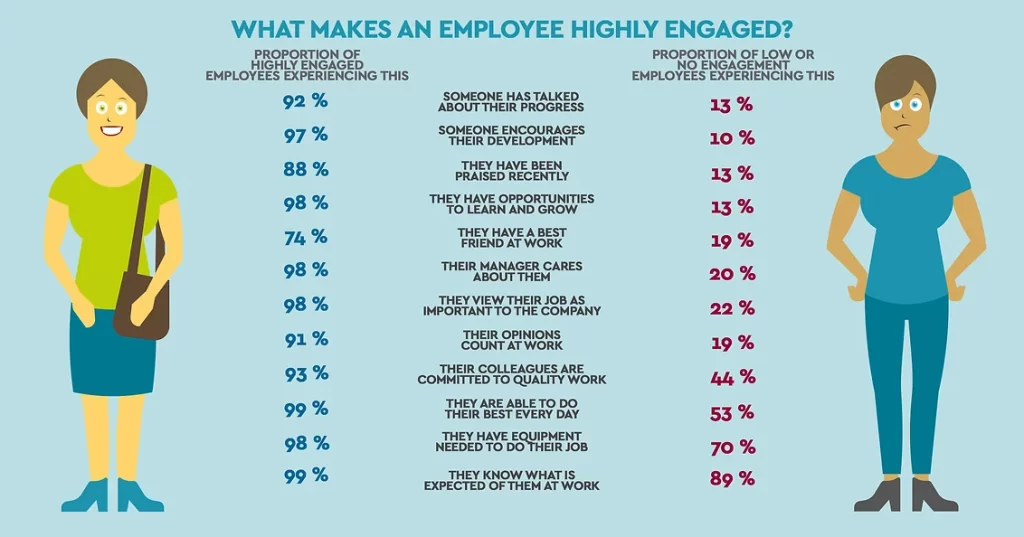
The infographic below highlights what highly engaged employees experience at work. This may help you determine what it takes to have highly engaged employees. Generally speaking, the highly engaged employees feel recognized, valued and involved.
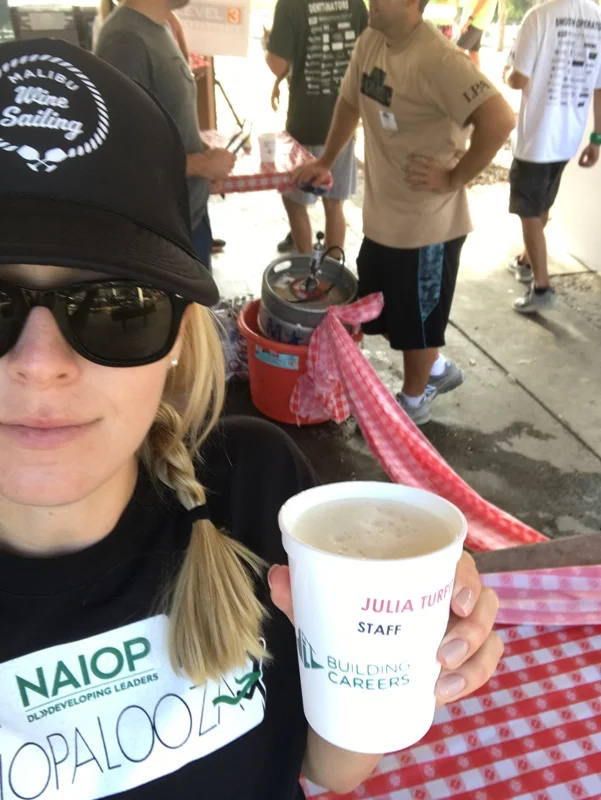
Building Careers proudly sponsored NAIOP San Diego’s NAIOPalooza 2017 benefiting HomeAid San Diego. A special shout out to Julia Turpit and her event team for putting on a successful event!
NAIOP’s CRE.Converge 2017, held in Chicago October 10-12 brought together over 1,500 professionals from across North America for networking, deal-making and lively discussion.
Above is a link to NAIOP’s conference recap, including industry thoughts on geopolitical trends, disruptive technologies, global economic investments, and strategic development approaches. Especially interesting to me was the discussion on the fourth wave of wealth and prosperity. Want to get ahead of the wealth curve? Find out what keynote speaker Dr. Michio Kaku shared surrounding his big-picture predictions for The Fourth Wave of Wealth and Prosperity its implications for commercial real estate.
Even when the interview is over, you can still make an impression. The fact that you were singled out for an interview means the interviewer considers you a serious candidate for the position. This is why it is important to follow up after every job interview, whether it is an in-person or phone interview or a second interview.
By following up, you are acknowledging and showing appreciating for the interviewer taking time out of their busy day to speak with you. You will also be reminding the interviewer that you are qualified and strong contender for the job and that you should be given serious consideration. Below are some ways you can improve your hiring chances through following up.
Personalized Thank You Note
Always send a personalized thank you letter or email the same day as the interview. Be genuine and write the note from scratch as a catch-all template may seem artificial.
A personal thank you note will show your sincere interest and give you one last opportunity to promote yourself for the job. Here is a general format to help you:
Express gratitude for the interviewer taking the time to meet with you and sharing information about the position and the company.
Mention something specific that was brought up in the meeting. Use it to demonstrate why you would be a good fit for the job and/or why you are interested in the job.
Remind them of your specific qualifications and personality traits that make you the best candidate for this position.
Restate your interest.
Let them know you look forward to hearing from them and to contact you if they have any further questions.
Remember to proofread your follow-up responses before sending them. A grammatical or spelling error will look bad and could take you out of the running. Be especially aware of people’s names as they will notice if you spell them incorrectly.
Follow Up Phone Call
If you haven’t heard back from your prospective employer within a week, give them a follow-up call. This is another way you can convey your interest in and your qualifications for the job.
If the position requires a lot of phone time, giving them a call is an added bonus. It will give you the opportunity to show you have the strong communication skills needed for the job. Here are some tips on what to say:
Begin by stating who you are and using your full name.
Say when you met with them and the position you interviewed for.
Tell them thank you for considering you for the job.
Inquire about the status of the position that you interviewed for.
Ask if there is anything specific you can speak to to quell any concerns about your ability to be successful in the role.
Reiterate your qualifications at a high-level or mention any key points you forgot to mention during the interview.
Request feedback on the hiring timeline for this role and when you can anticipate hearing from them again.
If you are nervous or think you might forget what to say, make a list of points you want to bring up.
In the competitive job market of today, it is important to follow up effectively after an interview. It will set you apart from many other candidates. However, failing to do so might cause you to lose out of the position to someone else. Make sure to impress interviewers and secure the job by following these guidelines.
You have a job interview. Congratulations! You have made it through the initial screening process – the company you are interested in has reviewed your resume and background and believes you have the expertise needed to be considered for the open position. The interview is now your opportunity to shine and convince the team interviewing you that you are the best candidate for the job. Here are some ways we recommend you do it.
1. Remember to be confident and maintain eye contact
Keeping eye contact with the person doing the interview shows that you are genuine and self-confident.
2. Give answers that are clear and to the point
Instead of just answering a question with “yes” or “no,” explain with a little more detail. For example, if they ask, “Have you had any experience with budgets?” you can respond with a summarized, yet specific answer like “Yes, at my last company, I was responsible for creating and adhering to budgets for a 20-property portfolio.” Furthermore, make sure to talk about what you were personally in charge of when asked about team projects.
3. When asked about your salary requirements, don’t go too low or too high
If you don’t know the salary range for the position when asked this question, it’s okay. Tell them what you are currently making, including the base salary and any other payment received, like bonuses. Let them know you are flexible and will weigh all aspect of the opportunity. You want to make sure you are getting what you are worth without pricing yourself out of the position.
4. Come prepared to describe why you want to work in this position at that particular company
Before the interview, you will have done research on the company, including its press releases and reports. Doing so will help you better express why you are interested in working for them. Moreover, you will be able to state your short and long-term goals while operating as a member of their team. Employers want someone who will be with the company for a long time. Make sure to mention why you would be an asset to them now and in the future.
5. Be authentic and genuine, but remain professional
Avoid making inappropriate comments or jokes and do not share unnecessary personal information. This may cause the interviewer to make unwanted judgments about you. Be sure to stay professional and tactful in your answers.
6. Avoid talking negatively about your last company or supervisor
During an interview, it is not the time or place to speak poorly about anyone. If you do, the interviewer will wonder if you were let go or pushed out of your last job. They might think you will be an employee who whines and becomes a bad influence on other employees. This might turn them away from wanting to hire you. Instead of bashing your prior company, describe the differences between the two and why this one would be a better match and a more appealing one to work for.
7. Ask for a business card
Doing so will show that you are interested in keeping in contact. It will also give you the information to follow-up with them and send a thank you note.
8. Before leaving, communicate your interest once again
At the end of the interview, give a firm handshake and restate your interest in the job. Be sure to reiterate an example of how your specific experience would make you a fit. Also, ask if they have any more questions or concerns about your capability and skill set match for this position. Getting these last statements in will show your confidence and enthusiasm for the job. Likewise, it will give you one more opportunity to alleviate any concerns they might have and promote yourself before the interview is over.
Good luck!
For additional tips on how to prepare for an interview read Part I (Prepare For a Successful Interview with These Eight Tips) and be sure to watch for Part III (coming out this Fall) on what to do as follow-up after the interview has taken place.
Your company has an open position that needs to be filled. You need help finding qualified candidates for the job. You’ve decided to work with a recruiter to help expedite the process, access their pre-screened network of qualified job candidates, and find the best candidate out there. Now to decide whether to engage in a contingent search or a retained search. Ultimately, it will come down to what your company’s needs are at the time, but here’s how we explain the options to our clients at Building Careers.
[endif]
In Fifteen Words or Less…
A contingent search is a no risk/obligation search process under a limited-scope agreement
A retained search is a priority search process under a full-scale hiring resource agreement
The Hiring Process
Contingent:
Recruiting firm complements a search process your company already has underway
Search is conducted under a limited scope of work, which means the recruiting firm is only involved in select aspects of the recruiting process
The process is a volume-based search approach; The recruiting firm works on many job openings for multiple clients concurrently
Your company takes a more hands-on approach to reviewing and evaluating the candidates
Does not require that recruiters meet set accountability milestones
Retained:
Recruiting firm/ retained search firm acts as an extension of your company’s internal hiring team and takes on all of the hiring process responsibilities
Scope of work starts from defining a tailor-made search strategy and culminates with successful candidate integration into your company
Search firm prioritizes a limited number of searches at a time to ensure quality candidates are presented; Recruiter has access to the full spectrum of active and passive candidates available and apply targeted search tactics
Recruiter is more heavily involved in assessing and vetting how candidate attributes will contribute to your company culture and ultimate success
Accountability milestones are predetermined in the initial scope to require executive search firms to meet and exceed your company’s expectations
Fee Structure
Contingent:
The fee is due when the executive search firm finds your company a qualified candidate who you ultimately hire
The fee may cost less than a retained search fee depending on the level of service a recruiter provides
Retained:
There are multiple types of retained searches, which determine the fee structure. They also allow for more accountability and transparency in managing investment and fee expectations. Retained searches can be;
Fully-engaged
Performance-based
By an engagement fee
The fee may cost more than a contingent search fee based on accountability hurdles, search practices, and greater scope of service
In the commercial real estate industry, companies tend to go with a retained search process for hiring senior level positions – the larger the role in the company the larger the search investment – and a contingent search for hiring entry-level or non-specialized positions. Contact us if you have any other questions or want to brainstorm on how to make your search for the right candidate a success!
The real estate industry tends to slow down in the summer. Understandably, this can be unsettling if you are eagerly looking for a new job or trying to fill a much-needed open position in your company. However, I believe this period can be a good thing for some companies/teams and here’s why.
During this time, we take that well-deserved vacation, which opens us up to new experiences and therefore new ideas and ways of thinking. We spend long summer evenings BBQ’ing with family and friends and these shared moments remind us of what’s important and help us keep healthy perspective. Being tourists in our own towns reconnects us with our communities and the importance of home. In turn, we bring these insights to work where, combined with the slower pace, we can more effectively catch up on email, prioritize projects, nurture office relationships and set goals for the remainder of the year.
As many of you know, I took some time off when my husband and I welcomed our first child – a sweet baby girl – into the world in April. Since then, our lives have been turned upside down in the best way possible, and I know many of you can relate!
Becoming a mom has been an extraordinary experience for me, and I will forever be grateful for these last few weeks I have spent focused on my family. I, too, have had moments when I would think (worry) about work and how my clients and job candidates – many of you! – were doing. I’d call in and my two rockstar teammates, Julia and Regan, would kindly fill me in, let me know they (of course) had everything under control and send me back to where I was supposed to be.
One look at my daughter and I returned to the present and the precious time I was having getting to know her and motherhood. I told myself that before I knew it I would be back at work and required to hit the ground running. And that day has now come! This week, I return to work a little sleep deprived but with a renewed sense of purpose and inspired like never before.
I truly hope you have the opportunity to take time out to spend these warm summer days doing what you love and finding inspiration in all that you do. In the fall, the real estate industry tends to kick into high gear once again. Since 2009, the end of each year has historically seen the highest sales volume of $2.5M+ real estate assets*. So far, this year seems to be on par with the trend, so I have no doubt it will be an exciting and productive end to the year. I look forward to catching up with many of you in the weeks ahead in preparation.
While studying finance at Penn State, Glova became enamored of the dynamic and tangible world of commercial real estate, and wrote her honors college thesis on commercial real estate analysis and trends. After nearly 10 years in commercial real estate finance, Glova founded an executive search firm serving the CRE industry. As president and executive recruiter of Building Careers, LLC, she uses her experience in the real estate industry to help employers recruit and retain top-tier talent. Glova previously worked as an associate, real estate finance, for BioMed Realty Trust.
Glova serves on the NAIOP San Diego Developing Leaders Council with a focus on university outreach through individual events and the NAIOP University Challenge. She also serves as the vice president of membership for the chapter’s Toastmasters Club. NAIOP set out to discover the inspiration and motivation driving this entrepreneur’s success.
NAIOP: What are some of the most rewarding aspects of your job?
Glova: The most rewarding aspect of my job is being able to assist employees on the path to their dream career while creating a connection with employers who are also inspired to succeed.
NAIOP: How has being a member of NAIOP helped your career?
Glova: Being a NAIOP member throughout my entire professional career has been the single most helpful element in growing my career and starting my business. When I initially hit a career crossroads, I reached out to my NAIOP network to learn more about their roles and companies. Having conversations with my peers and mentors regarding their ideal career paths led me to an interesting conclusion about my own. I discovered that understanding peoples’ motivations and providing the path and connections for them to get there is where I wanted to take my career. This NAIOP-assisted discovery was the catalyst to the founding of my recruiting firm.
NAIOP: What advice would you offer to other young professionals in commercial real estate?
Glova: My most important career lesson was realizing how essential and amazing my network is. Nurture, expand, exercise your network and resources and you will be pleasantly surprised by the results.
NAIOP: Who has been an inspiring or influential figure in your life?
Glova: My father, a fellow entrepreneur, has been an influential figure throughout my entire life. He has instilled values in me that gave me the courage to start and run a successful business.
Navigating your career in today’s job market takes strategic persistence and a lot of patience. So when you actually do manage to get “a foot in the door” and time on someone’s very busy calendar, it’s important to fully prepare yourself for the best interview possible. Here are some recommendations we typically run through with candidates to address before the interview.
1. Research the Company and Interviewer
To start, look up information on the person conducting the interview and on the company’s website. Then search for any reports or news articles about the company. It is important for you to know about the place you are applying for so that you can make your skills and experience relevant to them.
2. Look Over the Details of the Job
Make sure you have a firm grasp on the requirements of the position. That way, you can be prepared to share examples of your training and skills that relate specifically to the job description.
3. Come Prepared with a Few Questions
Allow the person interviewing to be in charge of the discussion, but try to ask a few questions. Be sure the questions reflect your commitment and desire to work for the company.
4. Practice the Interview with Someone
Doing a trial run of an interview will help you feel more confident in your answers. It will also help you work out the kinks of your delivery. Rehearse with someone who will give you honest feedback so that you can do your best during the real interview.
5. Edit Your Social Media Profiles
Before choosing who to hire, it is common for companies to look up public information about potential candidates. Therefore, it is important that you privatize or get rid of any tasteless or embarrassing references, pictures, etc.
6. Bring Multiple Copies of Your Resume
Resumes need to be proofread and look professional. Even though you have already submitted your resume to the company, bring a copy for each person that you will be speaking with during the interview.
7. No Cellphones
Even while you are waiting to be interviewed, turn off your cell phone or leave it in the car. It is unprofessional to use it or allow it to distract you during an interview.
8. Dress in a Professional Manner
Last but certainly not least, no matter where you have the interview, or what the company’s dress code is, make sure to look professional. A suit, tie, and dress shoes for men or similar attire for women will make a great first impression and help you look successful. Don’t forget to shave and brush/groom your hair.
By following these eight preparation tips, you can feel confident when going on your interview. Click here to learn more about how to best conduct yourself during (Part II) and after (Part III) an interview.