With all the talk of the retail market and where it is heading, Macerich is introducing a new retail co-working concept to a few of its major retail centers.
Since Amazon couldn’t just decide on one new headquarters, Amazon has announced that they will be formalizing their presence on the east coast in Crystal City in Arlington, Virginia, and Long Island City in Queens, New York, What does the process look like for these cities now?
Pay parity can benefit your business. Read on for expert insight, data, best practices and action items to close the gender pay gap for company leadership and HR professionals.
More than 80 countries have some form of equal-pay-for-equal-work legislation in effect, while approximately 24 have some sort of mandatory reporting requirement. See where the US, Canada and the UK stand in CREW Network’s latest white paper: http://bit.ly/payparityinCRE
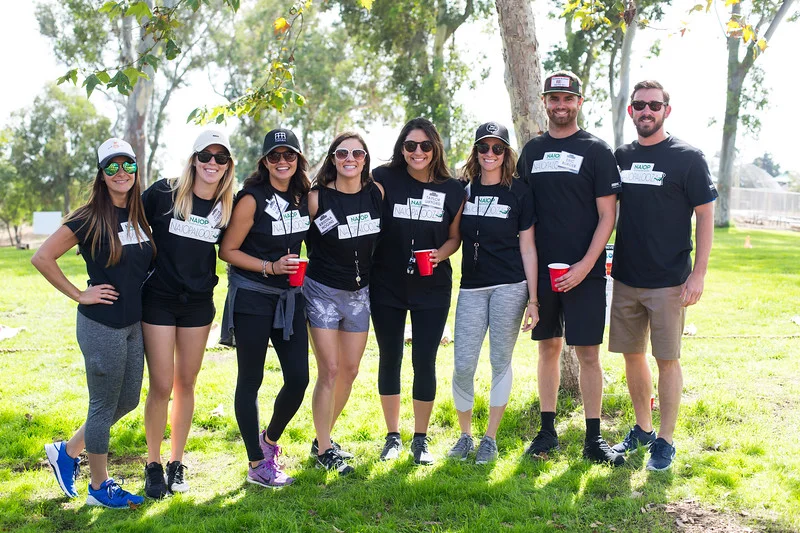
250 of us took part in the 9th annual NAIOPalooza on October 12th in San Dieguito Park and I couldn’t have been prouder of our commercial real estate community. This year, through your participation, donations, sponsorships and by merely spreading the word, we raised $18,000 (up from $12,000 last year) to support HomeAid San Diego.
As many of you know, HomeAid San Diego is the local chapter of a national organization, supporting homeless individuals and families through building and renovation projects. This year, NAIOPalooza’s donation will directly support The 12 Houses of TERI, a housing project in Oceanside for special needs adults. At the moment, the twelve residential homes need to be adapted with ADA renovations so that
residents can continue to live there for years to come. What we raised goes directly to making this specific renovation possible.
Whoever claims commercial real estate industry folks are competitive would be
right!
Teams were comprised of up to twelve peers and captained by some of our most esteemed and awesome industry leaders. We wore beer goggles to crawl under the army net for Capture the Ball. We all got wet in some way or another during the water balloon competition; Some of us even blamed the “spiky” grass for losing because, of course, it had nothing to do with any momentary lack of hand-eye coordination and dropping the balloon! We tested our balance, spinning around with our heads on a baseball bat and then racing across a raised wooden plank. We buddied up with our teammates to hop ungracefully across the finish line in the three-legged race.
Team Black Bandits captained by Devin Beale ultimately won and took home the big trophy (to be engraved with their team and captain’s name) that they will enjoy with pride until next year’s NAIOPalooza and our 2019 teams look to dethrone them!
Community of professionals
The day left a smile on my face and not just because it was a great day for an important cause or because I had the best job of all as one of four referees, alongside Tara Burns, Taylor Gifford and Kristina Hoggins. (Who would have thought blowing a whistle all day could be so comical!)
But I got to thinking… the day was so great because NAIOP is an organization that allows for the creation of the spaces where we live, work, and play and we clearly know how to have fun. But we are also much more than that. We are a community of professionals who not only want to be successful in what we do in business but we also recognize the importance of giving back to the communities we are honored to service and call home.
San Diego is one of 52 NAIOP chapters around the country and the tenth largest with 725 members. Our chapter holds more than fifteen events and raises over $150,000 for charitable organizations each year.
This year’s NAIOPalooza came together because of event chairs Julia Turpit, Mike Novkov and Eric Burger. A big thanks to them, to everyone who came out and to our many sponsors. Hope to see you all at the next event!
Contributor Carly Glova is president and owner of San Diego-based commercial real estate recruiting agency Building Careers. She has been a NAIOP member for ten years and will be NAIOP San Diego’s Developing Leaders Co-Chair in 2019.
A little bit of Monday Motivation! Farnoosh Brock, founder of Prolific Living shares her insights on corporate career motivation. Some of her tips include:
1. Care about what you can control and the people around you
2. Work smarter and focus on what matters
3. Convey an appropriate and professional attitude
Think about this. According to PeopleKeep.com, it is estimated that the cost to replace an employee is anywhere from 20% of an employee’s salary for low paying jobs to over 200% for higher level positions. What’s more, we are living and working in a candidate’s market.
So just what is your company doing to keep your employees and keep them productive, successful and happy? It all starts from the moment you onboard your newest superstar and the companies I see most successful in their employee retention strategies share two common qualities.
Build and Live a Strong Culture: As soon as you walk through an office door, you know if a company gets it or not. The office environment not only needs to reflect the company, brand and culture but it must express gratitude for the employees that work there and ultimately make the company what it is. This recognition can be shown in a variety of different ways and can be something as simple as signage and something more strategic such as making sure every employee plays a direct role in the company’s success and can see their impact. Knowing that their company cares about them and appropriately rewards them goes a long way in strengthening employee retention. These companies identify what makes them different than other employers, especially the competitors, and show employees how important they are too.
Companies with higher retention rates tend to even go so far as to allow what they stand for to exist outside of their office walls. Corporate social responsibility and opportunities to give-back to the community go a long way to strengthening a company’s culture, which in turn strengthens retention. Consider giving employees time off to run a race supporting cancer research or coordinate a team building activity around helping out at your local food bank. You will be amazed at how demonstrating how a company’s culture functions in the greater community fosters employee tenure.
Active Employee Engagement: The number one reason that I hear from candidates as to why they are looking for another job is for growth opportunities. This can be addressed through transparent conversations around employee skill set and overall company direction Clear goal setting, cross-training, mentorship opportunities, and encouraging external formal education play a huge factor in employee retention and motivation. Employees stick around for a company that invests in them.
The companies who listen to their employees and actively encourage open communication get the best kind of feedback there is. I always remind colleagues and clients that the exit interview is just as important as the hiring interview for learning what is keeping employees at your company and what might be driving them away. Whether it’s through one on ones, weekly team meetings or simply a routine walk to grab a coffee, the conversations shared during these moments inform companies on just how the teams really are doing and also nip potential issues in the bud. And we all know how they can escalate and cause employee morale and productivity to drop. For example, especially if a particular position has become a revolving door of employees, what you might discover in these conversations is that the manager of that group may require some training or reminders regarding conflict-resolution, work styles, or motivational tactics. As hard as it may seem to broach sensitive topics in the workplace, it is essential to build teams with staying power.
In honor of CREW Network’s National Convention coming to San Diego this week, I wanted to share some tips on how to shape what people say about you when you are not in the room. Carla Harris spoke at the CREW Convention I attended a few years ago and offers phenomenal insight. Hope to see you there!
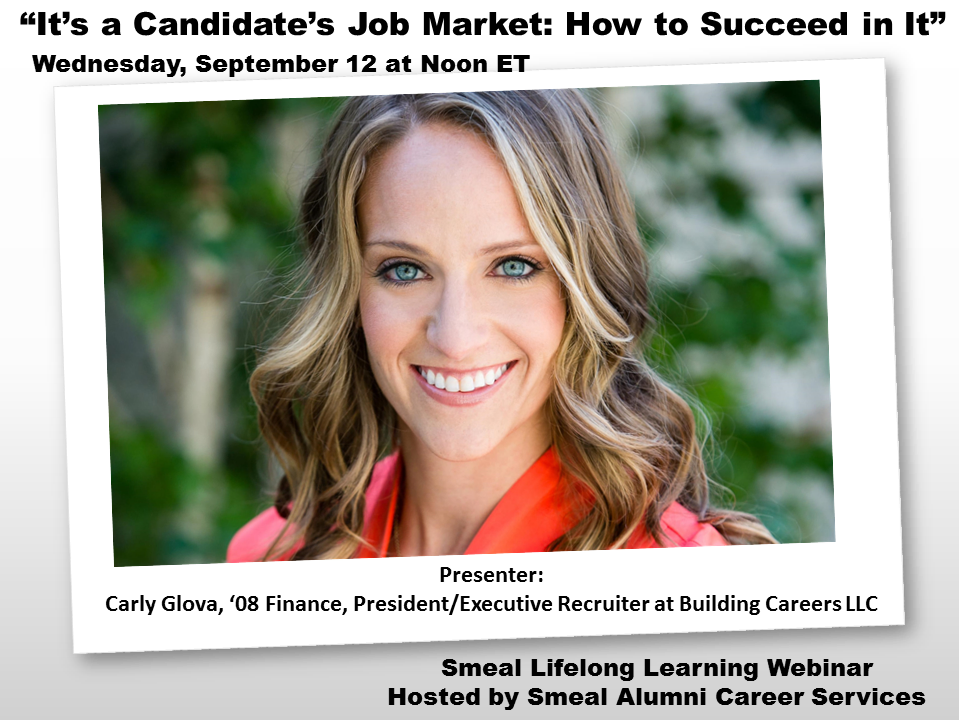
In September, Carly collaborated with her alma mater to host a webinar specific to the current candidate’s job market. If you weren’t able to attend, please view the webinar in the link below.
Carly Glova is the Founder and President of Building Careers, an executive search firm serving the commercial real estate world. Having determined that no executive recruiting firms in San Diego focused exclusively on supplying talent to the commercial real estate industry, Carly decided to take a risk and establish a firm that would have this specific market focus. In transitioning to recruiting, Carly used her affinity for and knowledge of the commercial real estate industry to make a difference in other people’s careers and inspire both employees and companies to succeed. What does a candidate-driven job market mean for me? What does it mean for my company? Feeling stuck or conflicted in your career choices or having trouble assessing or fulfilling the motivations of potential new hires? This increasingly prevalent market trend affects hiring and career decisions and adds a sense of urgency to the process. Carly aimed to prepare employers and employees alike for how to handle hiring and how to stand out in this war for talent. Check out her tips and tricks on how to crack a candidate’s market!
While income growth is still below what you would expect of a recovered economy nationally, San Diego’s median household is the highest of the 50 largest US metros. Median income rose 5.4% in 2017 to $76,207.
California ranks as the 5th largest economy in the world and as such, the job market continues to tighten, which also has a hand in the growing wages. The job market is still hot, especially for candidates looking for that next step in their career and salary level.