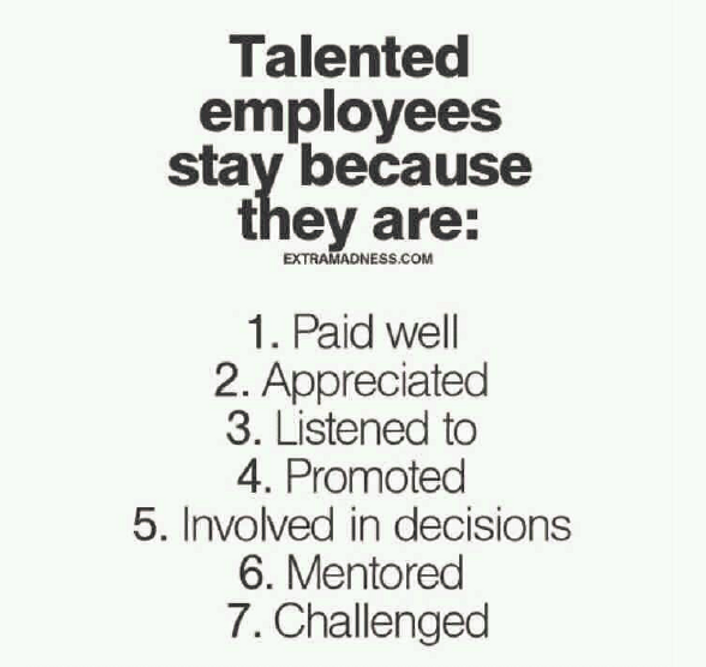
Talented Employees Stay Because They Are:
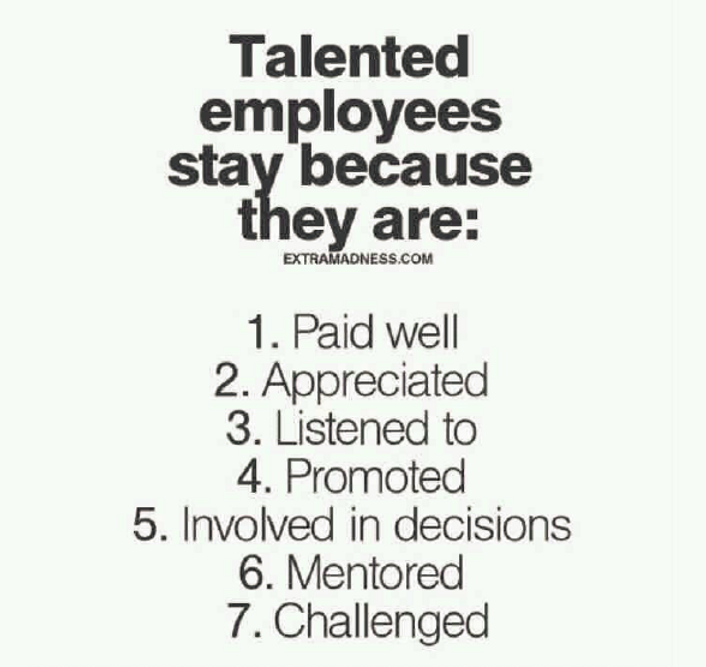
Talented Employees Stay Because They Are: Read More »

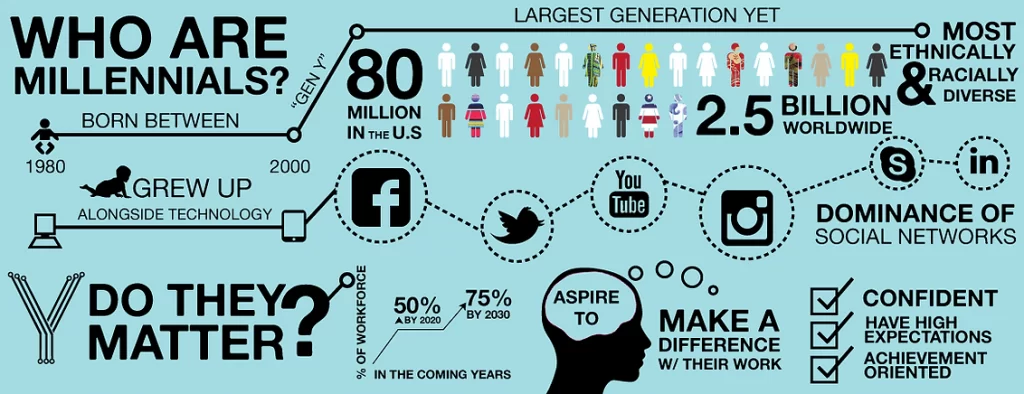
This month, Building Careers had the privilege of participating in the annual NAIOP Chapter Leadership & Legislative Retreat in Washington, DC. While attending a seminar titled, “How to Get the Younger Generation Involved,” Building Careers gained insight into the factors employers should consider when attracting, engaging, and retaining Millennials in the workforce.
Millennials, or Generation Y, are considered born within the early 1980’s to late 1990’s. They are characterized as being influenced by technology, 9/11, helicopter and snowplow parents, the Internet and trends and politics. According to studies, Millennials value autonomy, diversity, positive reinforcement, structure, and technology. These characteristics and values are important because they directly impact how Millennials perform in the workforce.
For companies looking to hire and engage Millennial talent, it’s important to provide them with two-way feedback, structure, and stability. They need to feel accountable for specific action items, not vague ideas. Millennials are looking for incentives (not just monetary ones) and significant opportunities for growth within an organization. Where employers, who do not fall in the Millennial category, often struggle with their younger employees, is the topic of promotions. Millennials desire, and frankly expect, to be promoted based on merit, not by paying their dues. Many employers in the Baby Boomer or Gen X eras, struggle to engage and retain their Millennial employees due to this factor.
Why do Millennials leave organizations in record numbers? Because they don’t find value in the work they’re doing, they require higher incomes than most starting salaries in order to maintain their lifestyles, their companies lack advanced technology, and because they don’t connect with their more senior colleagues. To retain Millennial talent, provide them with up to date technology, opportunities for growth and volunteerism, exclusivity, and incentives.
To learn more about organizational effectiveness, leadership & coaching, and performance & learning, visit http://springboardintl.com/.

Written and published on February 22, 2016 by Julia Turpit, Recruiting Consultant with Building Careers
Attracting, Engaging, and Retaining Millennial Talent Read More »

Finding and identifying the right talent is becoming harder and harder for rapidly growing commercial real estate companies. As business booms, and companies compete for talent, it is more difficult and extremely time consuming to not only know where to look, but then spend countless days vetting candidates to determine if they are the perfect fit for your firm. Look to us as a hiring resource for your Southern California CRE needs to connect you with great candidates.
“Continuing to identify the right talent to take advantage of the opportunities it has remains one of the greatest challenges for HFF, West Coast leaders Kevin MacKenzie and Michael Leggett tell GlobeSt.com.”
Read the full interview here: Finding the Right Talent in CRE
Originally published by Carrie Rossenfeld in GlobeSt.com on February 5, 2016
Finding the Right Talent in CRE Read More »


Happy almost 2016!
If you are anything like me, you hate new year’s resolutions, but are constantly on the lookout for ways to improve your life from both a functionality and a success standpoint. How can I be a better person while accomplishing this? What will make me a better leader? How can I approach my business that will encourage the work/life balance that we are all striving for?
As you look forward to and plan for 2016, perhaps you will find some inspiration in this article “Top Business Tips for 2016″ as successful leaders share their advice on running companies in the upcoming year.
Originally published by Will Smale in BBC News on December 28, 2015
Top Business Tips for 2016 Read More »

We all know that hiring the wrong employees can cost organizations a huge amount of money, but this infographic by Resoomay presents some startling figures.
According to the US Department of Labor and Statistics, the average cost of a bad hiring decision can equal 30% of first-year potential earnings, and according to the Harvard Business Review, as much as 80% of employee turnover is due to bad hiring decisions.
Employers are coming up with creative ways to confirm their hiring decisions. Examples of this include taking candidates out for dinner and drinks to see how they interact in a social setting, asking that candiates provide a writing sample or complete a test or case study, and hosting a panel interview to ascertain how candidates react under pressure and with competition.
With the high costs of not hiring the ideal employee, these additional candidate screening rounds are becoming more popular.
View the infographic here: https://lnkd.in/bTFGZkC
Originally published by Jörgen Sundberg in Undercover Recruiter
What is the True Cost of Hiring a Bad Employee? Read More »

SAN DIEGO—The importance of aligning yourself with people whose values match yours and having an open mind were among the topics discussed by the New Home Co.’s CEO Larry Webb and Woodside Homes’ CEO Joel Shine during the “Builders Unplugged” session at PCBC here last week. The two seasoned homebuilding professionals sat down with moderator Tim Sullivan, practice director for Meyers Research, for an informal and informative discussion about what they’ve learned in their careers.
Myers asked the two how they establish a culture in their business, and Webb said, “All companies have a culture. I want to work with people I love and care about in an organization that values its customers and each other. My whole role in this company is to make sure that the people who work with us come in and are excited and do the best work of their lives. Ultimately, I’m a coach, and I’m a much better soccer coach than a home builder by a lot. We’re all coaches—good and bad. The reality is, we all need each other.”
See the full article here: What Two Seasoned CEOs Have Learned

Originally published in GlobeSt.com by Carrie Rossenfeld on July 1, 2015
What Two Seasoned CEOs Have Learned Read More »

So what’s the right employee engagement strategy to dramatically increase engagement in your organization?

Company leaders should never assume they have all the answers. The best employee engagement strategy is one where the organization surveys the employees at least annually, the results are shared with every manager, and in turn, each manager creates an action plan with her team members.
That’s an employee engagement strategy that gets results.
Read the full article here:
The Best Employee Engagement Strategy is From the Bottom Up
By Kevin Kruse with Forbes
The Best Employee Engagement Strategy is From the Bottom Up Read More »

1. Fail to make a team of “A” players a priority
2. Pay below market value for talent
3. Maintain a long, arduous hiring process
4. Hire based on interviewing skills
5. Lack of defined career paths
6. No outside agencies – job boards only or feeding frenzy
7. Stop interviewing when empty seats are filled
8. Tolerate low performers
9. Lack of training and development
10. Absence of a performance management system
Check out the whole article here:
The 10 Deadly Sins of Talent Management
Written by Jon Bartos March 20, 2012

The 10 Deadly Sins of Talent Management Read More »

As a leader, you may be tempted to hire an individual, or keep him in your organization, based on talent alone. Unfortunately, this might be a recipe for disaster. Make sure you are vetting candidates and employees based on what is mutually beneficial for both the employee and the company. Here are 3 tips for building high performance teams.

Building High Performance Teams Takes More Than Talent Read More »