
griebcw1

Employees Worldwide Rank Work-Life Balance as More Important Than Pay

The modern era has ushered in profound changes to how we approach and perceive our work lives. With the rise of remote careers, beyond shifts in where and how people can now choose to work, we’re also rethinking the time we dedicate to our professions. Leading the way, Gen Z and millennials are driving a global movement that places work-life balance at the heart of well-being and happiness. According to a new annual international survey by Randstad, that balance is now a top motivator globally, overtaking pay incentives. 

Workers reject the 9-to-5 grind in favor of balance 

Workers are increasingly pushing back against outdated, rigid work environments, highlighting balance and health as top priorities in 2025. The survey, which collected insights from over 26,000 employees across 35 markets in Europe, Asia Pacific and the Americas, signals a perspective that the 21st century is on the cusp of an extraordinary revolution in the kinds of opportunities that may define the future. As more workers turn away from schedules and jobs that don’t suit their priorities, employers face mounting pressure to adapt and listen.

Of the workers surveyed, 83% cited work-life balance as the most important factor in job retention and selection, matching the preference for job security, while pay came in slightly lower at 82%. These figures tell a story that has been unfolding for some time and truly gained momentum during the COVID-19 pandemic, when workers were, for the first time, able to experience their routines in a new environment with a more flexible and freeing schedule. For many, it was a shift they embraced wholeheartedly and haven’t abandoned. 

A significant 76% of Gen Z views flexible work as important and are likely to adjust their career paths to reflect this. According to the research, pay becomes more of a crucial factor as we age, though the study also found that more senior age groups also value the prospects of a balanced work-life schedule. 

Continue Reading: https://www.success.com/work-life-balance-tops-pay/

Employees Worldwide Rank Work-Life Balance as More Important Than Pay Read More »

Are You Building a Career or Just Doing a Job? How to Future-Proof Your Role in CRE

In the dynamic world of commercial real estate (CRE), the only constant is change. From shifting economic cycles to evolving regulations, the landscape is in a perpetual state of flux. As a professional in this industry, you’re either building a sustainable career or merely doing a job that might not exist tomorrow. The difference? A career is a strategic investment in your long-term growth and adaptability, while a job is a temporary station with limited scope for advancement.

So, how do you ensure that you’re building a career and not just passing through a job in CRE? Let’s explore actionable steps to future-proof your role in this ever-changing industry.

1. Embrace Lifelong Learning

The CRE sector is increasingly driven by technology, data analytics, and new financial models. To stay relevant, you must be proactive about acquiring new skills and knowledge.

  • Stay Updated on Industry Trends: Follow reputable CRE publications, attend industry conferences, and subscribe to market reports. This keeps you informed about emerging trends like sustainable building practices, proptech innovations, and regulatory changes.
  • Invest in Certifications: Credentials such as CCIM, CPM, LEED, or an ARGUS certification can significantly enhance your credibility and open doors to higher-level opportunities.
  • Take Online Courses: Platforms like Udemy, Coursera, and CRE-specific training programs like Break Into CRE offer courses in data analysis, investment strategies, and digital marketing tailored to the industry.

By continuously upgrading your skill set, you position yourself as a forward-thinking professional capable of adapting to market changes.

2. Develop a Personal Brand

In a competitive industry like CRE, your reputation is a powerful asset. Are you known as a reliable negotiator? A data-driven analyst? A connector with a vast network? Identifying and nurturing your personal brand can set you apart from colleagues who are just doing their jobs.

  • Leverage LinkedIn: Share industry insights, engage with relevant posts, and showcase your accomplishments. Consistent visibility positions you as a thought leader.
  • Network Strategically: Attend industry events, webinars, and seminars. Connect with peers, mentors, and potential clients to build relationships that could lead to future opportunities.
  • Publish Content: Write articles, blog posts, or even case studies that demonstrate your expertise in CRE. Not only does this establish authority, but it also keeps you top of mind for potential employers or clients.

Building a personal brand isn’t just about self-promotion — it’s about aligning your expertise with the evolving needs of the industry.

3. Be Tech-Savvy or Get Left Behind

Technology is rapidly transforming how commercial properties are managed, marketed, and sold. From AI-driven market analysis to virtual property tours, tech proficiency is no longer optional; it’s a necessity.

  • Adopt PropTech Tools: Familiarize yourself with tools like CoStar, RealPage, or Reonomy. Understanding how to leverage these platforms can enhance your market analysis and client presentations.
  • Master Data Analytics: Data is the currency of modern CRE. Learn how to interpret data to predict market trends, identify investment opportunities, and mitigate risks.
  • Stay Open to AI: Artificial intelligence is reshaping the industry by streamlining workflows and enhancing decision-making. Explore how AI can assist in property valuation, tenant management, and lead generation.

Staying tech-savvy ensures you’re not just executing tasks but strategically leveraging technology to drive business outcomes.

4. Cultivate Resilience and Adaptability

The CRE sector is heavily influenced by external factors — economic downturns, interest rate fluctuations, and regulatory shifts can all impact your role. How you respond to these changes can define your career trajectory.

  • Embrace Change: Rather than resisting new protocols or systems, be the first to adopt and champion them. This demonstrates leadership and a growth mindset.
  • Seek Mentorship: A mentor who has weathered multiple market cycles can provide invaluable insights into navigating uncertainty and identifying emerging opportunities.
  • Diversify Your Skill Set: If you’re currently focused on asset management, consider learning about investment sales, or vice versa. Expanding your expertise mitigates the risk of being pigeonholed into a single role.

Resilience in CRE is about more than just surviving downturns; it’s about capitalizing on change to further your career.

5. Align Your Goals with the Company’s Vision

Professionals who excel in CRE are those who align their personal career goals with the long-term vision of their employers. Are you actively seeking ways to contribute to the company’s strategic objectives?

  • Identify Key Business Drivers: Understand what your company values most — whether it’s client acquisition, asset expansion, or operational efficiency.
  • Propose Solutions: Offer to lead projects that address specific challenges or tap into new revenue streams. This not only showcases initiative but also positions you as a vital asset.
  • Request Feedback: Regularly seek constructive feedback to ensure your efforts align with both your personal development goals and the company’s broader objectives.

When your goals and the company’s vision are aligned, your role becomes more than just a job — it becomes a vital component of the organization’s success.

Conclusion: Take Charge of Your CRE Career

In the fast-paced world of commercial real estate, standing still is not an option. The difference between building a lasting career and just doing a job lies in your ability to anticipate industry shifts, adapt to new technologies, and align with evolving market demands.

By committing to lifelong learning, cultivating a strong personal brand, embracing technology, developing resilience, and aligning with your company’s vision, you’re not just future-proofing your role — you’re creating a sustainable, thriving career in CRE.

Are you ready to take the next step? Start by assessing your current position, setting clear goals, and implementing these strategies today. The future of your CRE career is in your hands.

Are You Building a Career or Just Doing a Job? How to Future-Proof Your Role in CRE Read More »

Tips to Create the Ultimate Winning Resume

Find out how to craft a winning resume that stands out

In today’s competitive job market, sending out winning resumes can make all the difference. A resume is your chance to showcase your suitability to potential employers and secure an interview. It captures the attention of hiring managers and highlights your skills, achievements, and suitability for the desired position. Here, we’re sharing our expertise on how to write a winning resume, with invaluable tips to help you stand out from the crowd – let’s go!

Top tips for winning resumes

A winning resume is one that secures interviews. A lot of job seekers are ghosted by companies, mostly because the resume fails to impress a hiring manager. By incorporating the following elements into your resume, you can create a winning document that effectively communicates your suitability, matches job requirements, and highlights your achievements and skills. 

Clear and concise summary statement

When it comes to crafting winning resumes, the summary statement holds significant importance. It serves as the first impression to hiring managers, enticing them to continue reading your application. A strong opening statement can capture their attention and make them eager to explore your qualifications further.

Your summary statement should succinctly summarize your professional background, skills, and experience. It needs to instantly communicate your value proposition and highlight what sets you apart from other candidates. A well-crafted opening statement can leave a lasting impact and compel employers to consider you for the job.

Continue Reading: https://topresume.com/career-advice/tips-to-create-the-ultimate-winning-resume

Tips to Create the Ultimate Winning Resume Read More »

How To Recruit Top Talent for Your Company in 7 Steps

Recruiting top talent is important in every industry, and in some industries, hiring qualified people is especially competitive. There are certain strategies human resource (HR) professionals and hiring managers can use to recruit talented people. Understanding how to appeal to top talent and move them through the hiring process may help you increase the number of highly qualified employees at a company. In this article, we explain what recruiting talent means and discuss how to recruit top talent, including improving company culture and making quick job offers.

What does recruiting talent mean?

Recruiting talent is the act of finding high-quality candidates to hire, either while working as a recruiter or hiring manager. Organizations generally want to ensure they have the best workforce possible, and finding, hiring and keeping top employees can be a complex process. Recruiting talent requires companies to not only select the best candidate out of a pool but also follow certain practices to attract the best talent and keep them long-term. This is often a combination of talent recruiting, talent acquisition and talent development.

Continue Reading: https://www.indeed.com/career-advice/career-development/recruiting-talent

How To Recruit Top Talent for Your Company in 7 Steps Read More »

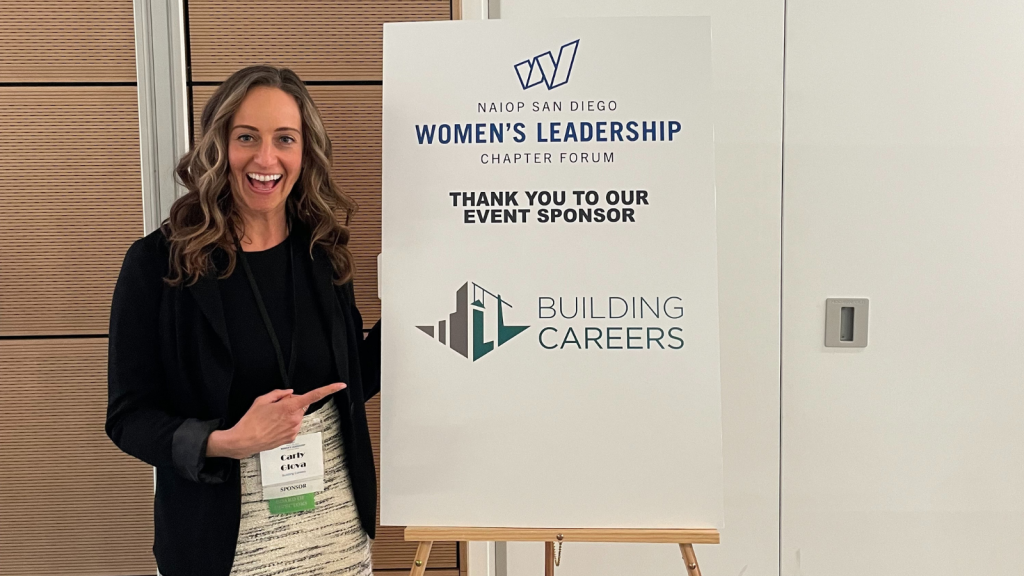
10 Years of Building Careers: A Journey of Growth, Grit, and Gratitude

This April marks a full decade since I took a leap into the unknown and started my first company—Building Careers, LLC. I had no background in recruiting. What I did have was a clear mission:
To help others grow, align, and thrive in their careers.

Today, we celebrate 10 years of entrepreneurship—not just building a business, but cultivating a trusted name in San Diego and Southern California’s commercial real estate industry. It’s been a journey of learning, resilience, and forming long-term, meaningful relationships.

From Vision to Reality

Back in 2014, I saw a gap in the market: companies struggling to find quality talent and professionals craving career direction and alignment. I brought my CRE knowledge to the table and dove headfirst into recruiting—learning the business from the ground up.

Soon after, Julia Turpit joined the company. Her recruiting expertise helped us create structure and elevate our approach early on, setting a strong foundation for future growth. Her contribution remains an important part of our story and I am endlessly thankful she came into my life when she did.

What Makes Us Different

We don’t just fill jobs—we build teams.

Over the past 10 years, we’ve made nearly 200 placements across the commercial real estate space, most of whom are still thriving in their roles today. Two of our very first placements—made during our first year—are still with their companies and have grown significantly in responsibility and leadership. That kind of longevity is rare, and we’re proud to be a part of those success stories.

We now work with over 100 repeat clients, and are fortunate to be in a position where we can selectively partner with companies whose values align with ours. We’ve placed entire teams—10+ hires per company—and helped organizations expand into new markets, including Phoenix, Dallas, Denver, and Seattle.

A Strategy That Goes Beyond Resumes

At Building Careers, our strategy is deliberate and human-first. We take the time to deep-dive into company culture and personality alignment, only presenting candidates we genuinely believe will thrive long-term—not just short-term hires or “close enough” matches.

We also encourage companies to co-create growth roadmaps with new hires, not just for the first 30, 60, or 90 days—but extending through the first year and even 5-year career trajectories. This clarity around goals, expectations, and development builds trust, retention, and success—for everyone. We’re here to build alignment and career longevity.

Looking Ahead: The Next 10 Years

As Building Careers moves into its second decade, our focus is on deepening strategic partnerships with clients who share our people-first mindset. We’ll continue to evolve our services in a way that supports long-term growth for both companies and candidates.

This year, we’re also excited to roll out an annual compensation survey, offering greater transparency in the CRE talent market and helping our clients stay competitive and informed.

We remain committed to being not just recruiters, but growth partners—helping shape teams, careers, and company cultures that thrive together.

Gratitude & Growth

To every client who’s trusted us to build their teams—and every candidate who’s allowed us to be part of their journey—thank you. Your growth has always been our “why.”

To my husband, Brent Glova, whose unwavering belief in me has been the backbone of this journey…
To the friends, mentors, and cheerleaders who supported me when the path was unclear…
Thank you for being part of this adventure.

This company has taught me more than I imagined—about leadership, trust, resilience, and relationships. And while I’m proud of what’s behind us, I’m even more excited for what’s ahead.

Here’s to the next 10 years—of growing companies, advancing careers, and building with purpose.

Let’s keep building.

10 Years of Building Careers: A Journey of Growth, Grit, and Gratitude Read More »

9 Skill Sets to Advance Your Career

Having a strong skill set is essential in both your personal and professional life. A skill set is a combination of abilities, qualities and experiences you can apply to perform tasks well. These can include soft skills such as interpersonal skills, organization and leadership as well as technical skills such as research, computer programming, accounting writing and more.Spending time on improving your skills can help you achieve personal career goals such as earning a promotion or becoming an expert on a certain topic. Your skill set can be applied to progress in your current career or expanded to earn a job in a different field or industry.

What is a skill set?

A skill set is a collection of skills and abilities. Each person has a different skill set depending on their interests, natural abilities, personal qualities and technical skills. Skills can expand your professional competency and allow you to perform your job well.You can gain and improve skills with education and experience. The more advanced you are in performing certain skills, the more likely you are to get or progress in a job.

Continue Reading: https://www.indeed.com/career-advice/career-development/how-to-develop-your-skill-set

9 Skill Sets to Advance Your Career Read More »

What Companies Mean When They Say “Don’t Use AI in Your Job Applications”

It’s a confusing time to be a job seeker right now: While artificial intelligence (AI) is becoming an increasingly critical part of work, many companies (including AI-focused ones) are emphasizing how much they disapprove of the technology being used in the job search.

“Please do not use AI assistants during the application process,” Anthropic, the organization behind popular AI assistant Claude, tells candidates who apply on its website, as reported by 404 Media last month. “We want to understand your personal interest in Anthropic without mediation through an AI system, and we also want to evaluate your non-AI-assisted communication skills.”

You may have a very good excuse for wanting or needing to use AI when applying to jobs. Lief Larson, the CEO of Salesfolks, a hiring agency for sales teams, argues that it can often feel like the only solution for tackling a crowded market that requires playing the numbers game.

“You have massive volumes of job postings at the same time that people who are looking for roles are having to apply to more roles than they ever have before,” Larson says. “If I’m putting myself in the shoes of the candidate, I understand why. You can write more content, you can try and have it be more customized and bespoke to an opportunity. And so the temptation is large, and it’s real to utilize that.”

So what can we make of this contradiction—that adopting AI is a must for many workers, and yet discouraged in one of the most important stages of one’s career journey?

Continue Reading: https://www.themuse.com/advice/ai-in-job-applications

What Companies Mean When They Say “Don’t Use AI in Your Job Applications” Read More »

A Guide to Building Positive and Productive Workplace Relationships

What tactics have you used to build positive workplace relationships at the office? Let us know in the comments!

Think about some of your best moments at work—the times when you’ve felt most fulfilled, most proud of your accomplishments, most happy. It can be at any job—not necessarily your current one.

Chances are, you’re thinking not just about what you were doing in those moments but also who you were with—the higher-up who recognized your accomplishments or the colleagues who were right there with you, cheering you on.

That’s not an accident. As Brandon Smith aka “The Workplace Therapist” explains, workplace relationships are directly tied to happiness at work. And in a time when half of full-time workers report spending more time at work than with their families or on their own, workplace relationships are becoming vital to overall happiness, as well.

But how do you build positive workplace relationships that can help you to be happier and more productive at work while still maintaining personal boundaries?

Continue Reading: https://www.idealist.org/en/careers/guide-building-positive-workplace-relationships

A Guide to Building Positive and Productive Workplace Relationships Read More »

20 Essential Leadership Skills and How to Develop Them

Some people are natural-born leaders; others work hard to perfect and optimize their leadership skills so they can help their team succeed.

Whether you’re up for a managerial job, you want to impress your boss with your leadership skills or you’re hoping to become a better leader in your current role, there are numerous professional skills and natural qualities you need to possess.

In this guide, we’ll explore the 20 essential leadership skills you need—and how to develop them.

What makes an effective leader?

Strong leadership goes beyond being a good manager. It’s about setting clear and achievable goals for your team to follow, making tough decisions during difficult times, and ensuring there is always an open and clear line of communication within the department.

Top 20 leadership skills

A great leader’s skill set is a varied and comprehensive one — and it should at the very least feature:

1. Effective communication

All great leaders are good communicators — they have the ability to get their point across in a constructive manner and have strong interpersonal skills. They must master all forms of communication, including one-on-ones, company meetings and in written form. You should have the ability to be sensitive to personal situations and give team members the time to share their thoughts and problems.

2. Proactivity

A successful leader doesn’t wait for things to happen; they’re proactive and they anticipate desired results. They identify threats and take action against them. They’re constantly thinking of ways to improve and do better. Whether that goal is business-related or personal, they always strive to do better.

3. Ability to motivate

Good leaders and managers inspire their employees to do better, and they motivate those around them. In fact, a Gallup study found that highly engaged and motivated employees can lead to 21% greater profitability. This can also lead to lower turnover rates and reduced absenteeism.

This fire in their belly comes from their passion and pride to be the best and to achieve more than they ever expected. And as the great Maya Angelou once said: “Nothing will work unless you do.” So, if you want to encourage, you need to show people how.

4. Organization

Organizational skills are crucial in management positions. You need to be able to handle a number of different projects and spend ample time on each, ensuring you meet deadlines. If you lack this quality, you should find techniques and methods to help you be more organized.

5. Confidence

Confidence is important in this role, as people will look at you to learn how to behave, particularly when things are going pear-shaped. If you remain calm and confident in all situations, you’ll teach your staff to carry the same air and morale.

Continue Reading: https://www.careeraddict.com/leadership-skills

20 Essential Leadership Skills and How to Develop Them Read More »

Hard Skills Explained (and the Top 8 for Your Resume)

Don’t forget to focus on your hard skills!

Now that it’s time to apply for a job, your number one goal is going to be to stand out from the crowd of job seekers – all of whom claim to be the best. 

  • How do you prove you have what it takes to beat other candidates?
  • What are you going to do to get the attention of a hiring manager who just had over 100 resumes land on their desk? 

You know that you have to build a stellar resume that will wow them with your career achievements, so you’ve probably spent hours collecting every quantifiable accomplishment you can think of. 

That’s not all you have to do, though! You need to create a list of skills to showcase on your resume, as well. There should be a balanced mix of hard and soft skills, so that future employers know you’ll be able to do the job and get along with other members of the team. 

In this post, we’re going to spend a fair amount of time on hard skills. Not only will we explain hard skills, but you’ll walk away with the top hard skills to include on your resume, based on your industry. 

So, if you’re ready, here we go!

Continue Reading: https://topresume.com/career-advice/what-are-hard-skills

Hard Skills Explained (and the Top 8 for Your Resume) Read More »

Skip to content