Blog

Why Gratitude Matters in the CRE Talent Market

As we move into the season of reflection and gratitude, I’ve been thinking about how appreciation shows up across the commercial real estate industry and how much it matters. In a space known for tight timelines, high stakes, and constant movement, gratitude isn’t a soft concept. It’s a leadership quality that directly strengthens a company’s reputation, culture, and ability to attract top talent.

One of the clearest patterns I’ve seen over the past decade is that the most successful teams are intentional about how they make people feel. Not just their tenants or investors but their employees and candidates as well. When leaders consistently express appreciation, acknowledge effort, and communicate with clarity, it creates an environment where people want to show up and contribute at a high level. That energy becomes part of the employer brand long before a role is posted.

Gratitude also shows up in the small moments during the hiring process, and those moments tend to have an outsized impact. It can be a hiring manager thanking a candidate for thoughtful preparation, or a candidate sending follow-up notes that reflect genuine interest and respect for the interviewer’s time. These gestures aren’t the reason someone is hired, but they do reinforce professionalism, humility, and alignment, qualities that continue to stand out in a competitive market.

On the employer side, gratitude is a differentiator in candidate experience. Candidates are remarkably perceptive. They notice when a company communicates clearly, respects timelines, and treats them as more than a résumé. Even when the process ends in a “no,” an experience built on gratitude often turns those candidates into future referrals or brand advocates. That kind of goodwill compounds over time, strengthening a company’s overall reputation within CRE.

The past few years have reshaped expectations across the industry. Candidates want meaningful work, strong leadership, and cultures where communication feels human not mechanical. Gratitude reduces friction, builds trust more quickly, and drives higher offer acceptance rates. And in an industry where the best talent often has multiple options, trust is everything.

This season also holds extra meaning for me personally. Building Careers celebrated its 10-year anniversary this year, a milestone that brings up a lot of reflection. Ten years of partnering with incredible companies, supporting hundreds of candidates in their career transitions, and watching the CRE talent landscape evolve in real time. I’m grateful for every client who has trusted us with their hiring strategy and every professional who has let us be a part of their journey.

I’m also grateful for growth of the business, but also of the team. Bringing on Ceci Swanner this year has added such a dynamic and energizing chapter to the work we’re doing. Her perspective, curiosity, and instinct for this industry have already made an impact, and I’m excited for what this next phase will look like.

Looking ahead to 2026, I’m optimistic. CRE is resilient. Teams are evolving. Leadership is becoming more intentional. And companies that prioritize gratitude in how they lead, hire, and communicate will continue to attract the kind of talent that moves the industry forward.

Wishing you, your teams, and your families a meaningful Thanksgiving. Thank you for being part of the Building Careers community — and for the trust, partnership, and connection that make this work so rewarding.

Why Gratitude Matters in the CRE Talent Market Read More »

Why it’s totally normal to change your major & dream job

For anyone who needs to hear it, your first dream job isn’t your forever dream job. You’re not locked into the major you choose freshman year—or, if you’re part of the one-third of college students who change majors during undergrad, even a major you choose as an upperclassman. Consider this post permission to take as many career twists and turns as your heart desires. If you’re thinking about changing course, you’re not alone.

Fun fact: Handshake’s President of Field Operations, Nolan Farris, graduated with a degree in anthropology in 1997 with the intention of teaching, and has now been leading global sales organizations for years. And it turns out he was ahead of the trend. Recent Handshake research shows that of the 57% of college seniors who entered college with a dream job in mind, fewer than half have the same goal now. Meanwhile, almost half of seniors who didn’t have a dream job four years ago have discovered one while pursuing their undergraduate degree.

Internships, work experience, and academic courses are pivotal in shaping the idea of what students like you want in a job, especially in a time where the job market is rapidly changing. You’ve probably applied to and/or attended college in a post-pandemic universe, witnessed waves of layoffs, and are adapting to AI in real time. It makes total sense that as the world experiences major changes, your idea of what you want to do will shift, too.

Continue Reading: https://joinhandshake.com/blog/students/advice-for-dream-jobs-and-career-pivots/

Why it’s totally normal to change your major & dream job Read More »

How to Answer “What Motivates You?” – With Examples

When a recruiter or hiring manager asks the common “What motivates you?” interview question, it may seem like one of those simple questions that should be easy to answer. However, if you’re not prepared or have never taken the time to consider your own motivations, you may find yourself struggling to come up with a compelling response. Unfortunately, your inability to quickly respond to this simple question could leave the interviewer with doubts about your candidacy.

In this article, we’ll explain why interviewers ask the “What motivates you?” interview question and provide some tips to help you prepare your response. We’ll also include some great example answers that you can customize to ensure that you’re always ready to respond to questions about your motivation.

Why do interviewers ask the “What motivates you?” interview question?

This question is similar to asking, “What makes you unique?” It’s meant to discover whether or not you’re the right fit for the job and, more importantly if you’ll fit within that company’s particular workplace culture and goals.

It’s a useful question that can provide insight into how and why you’re motivated to be a successful employee and what fulfills you in your job or career. Your answer can also provide the interviewer with additional insight into your personality and approach to work. All these things, along with your skills and experience, help the interviewer determine whether you’re the best person to hire.

It is important to remember that employers who ask about what motivates you are not asking you why you’ve decided to pursue your career path or apply for their open position. They are simply trying to figure out what drives you to do the best job possible, achieve your mission, and contribute to your employer’s success.

Continue Reading: https://topresume.com/career-advice/how-to-answer-what-motivates-you-with-examples

How to Answer “What Motivates You?” – With Examples Read More »

30+ Behavioral Interview Questions to Prep For (With Sample Answers!)

Behavioral interview questions can be tricky, but answering them might be easier than you’d expect. Here’s our guide with sample questions and answers.

Interviews can be high stakes. However, some interview questions can actually be fun. Not in the zany-but-realistically-kind-of-stressful “How many golf balls will fit in a bus?” kind of way, but in a sense that interviewers are really just asking for a good story starring you as the main character.

Behavioral interview questions are non-technical, focused on you, and 100% something you can prepare for in advance. You actually have the answers already. You just need to find the right stories and polish them up a bit.

Here’s your ultimate go-to guide for answering interview questions about behavior—including common behavioral questions you might hear and example answers.

What are behavioral interview questions?

Behavioral interview questions are questions or statements that ask candidates to share examples of specific situations they’ve been in. Usually interviewers want to know about an experience where you had to use certain skills—soft skills especially—or had to navigate certain types of scenarios. (Read: It’s the “Tell me about a time when…” genre of questions.)

Continue Reading: https://www.themuse.com/advice/behavioral-interview-questions-answers-examples

30+ Behavioral Interview Questions to Prep For (With Sample Answers!) Read More »

Recruiting Strategy Meetings: Why You Really Need to Have Them

When a position becomes open in the organization, HR and the hiring manager should meet to discuss the position. Some people call this meeting an “intake” meeting. I prefer the term recruiting strategy meeting because the results from the meeting help to establish the recruiting strategy for the open position.

Some people might say, “Hey, I don’t need to have this meeting because I recruit for this position all the time.” And I get it. I’ve worked places where there were certain positions we regularly recruited for. But that doesn’t mean we should skip the meeting. Because one of the things that can happen during the meeting is confirming the job description. 

Forgive me for going off on a quick tangent here but updating job descriptions is (I believe) one task that both HR and hiring managers dislike. And if you’ve ever had to update all the organization’s job descriptions at the same time … well, then you know that at the end of the project, people say things like, “Whew! I’m glad that’s over and I never want to see another job description again.” That’s the wrong response. Once a job description is current, the organization needs to find a way to keep it current. It’s not by ignoring them. 

So back to the recruiting strategy meeting. This is a time to quickly review the job description and confirm that it’s current. Otherwise, managers might make small changes to the job description and HR doesn’t know. Then there might come a time when HR presents candidates to the hiring manager and the hiring manager says, “Why are you sending me candidates with this background? We changed that requirement months ago.” All that work = wasted. Because those little job description changes add up. 

Besides the job description, another reason to conduct a recruiting strategy meeting is to have an effective and efficient process.Get HR and the hiring manager aligned about what’s going to happen and when. This reduces the “I don’t know what they’re doing.” response when someone asks why a position hasn’t been filled yet. 

Continue Reading: https://www.hrbartender.com/2025/recruiting/recruiting-strategy-meetings-why-need-them/

Recruiting Strategy Meetings: Why You Really Need to Have Them Read More »

Productivity and Flexibility Do Not Have to Be Mutually Exclusive

I know that most organizations have moved away from hybrid and remote work. They want employees onsite. I get it. There are advantages to employees being onsite. It can be helpful for communication, decision making, problem solving, and team building (just to name a few). 

That being said, there are a couple of things about return to the office (RTO) announcements that are frustrating. First, organizations should be honest with employees about the reasons that they’re doing it. Some of the announcements are an absolute sugar-coated mess and employees know it. This doesn’t create a positive work environment, which can have an impact on productivity. 

But the second reason that RTO announcements are frustrating is the one I wanted to talk about today. Just because organizations announce an RTO doesn’t mean they have to eliminate flexible schedules. If an employee asks to work from home once every six months, I’d like to think the organization can make that happen. 

Another option that organizations can offer employees is a 4-day work week. Employees work onsite but only 4-days a week. This could be a nice compromise between what the company wants (onsite work) and what employees want (less commuting time, work life balance, etc.). I’ve worked for companies that offered employees who worked second or third shift the option of 4-day work weeks. It was the perk of working an undesirable later shift and it worked well. 

I wanted to mention flexible scheduling because I’ve seen a few articles about a scheduling trend called 996. I’m really hoping it’s not true. 996 work is described as having a schedule from 9a to 9p six days a week. It appears to be what has been termed the new ‘hustle culture’. 

Continue Reading: https://www.hrbartender.com/2025/leadership-and-management/productivity-flexibility-not-mutually-exclusive/

Productivity and Flexibility Do Not Have to Be Mutually Exclusive Read More »

You Need to Negotiate Your Lifestyle

Soon, Cal Newport and I will be reopening Top Performer for a new session. This is the course we teach that shows you how to deeply understand your career, build rare and valuable skills, and translate those skills into work you love.

In anticipation of the new session, I’ve been writing some lessons on career advice. I started by explaining why you should master your career rather than try to run away from it. I argued that you need to build rare and valuable skills, which don’t come automatically. I also showed why working harder can actually backfire, if that becomes your source of competitive advantage.

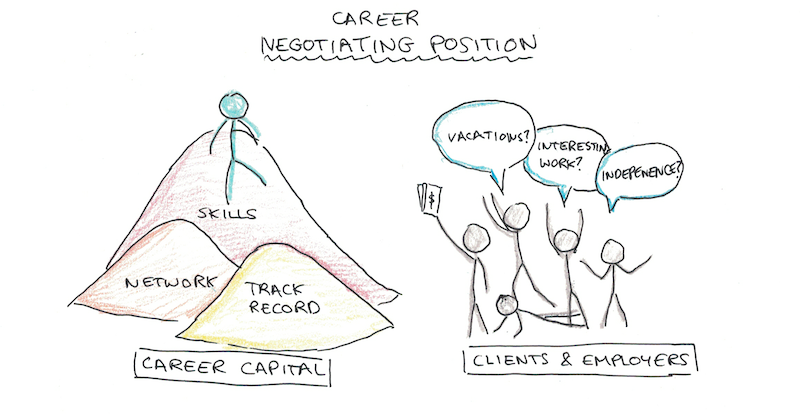
The theme throughout all these lessons is that to have a great career, you need career capital. Skills, relationships and other assets that make you in demand.

However, while getting career capital isn’t trivial, and it’s the main thing that separates the desirability of different careers, it isn’t the only step to having work you’ll love. Having career capital isn’t enough, you need to actually use it to negotiate the lifestyle you want to live.

What Kind of Lifestyle Do You Really Want?

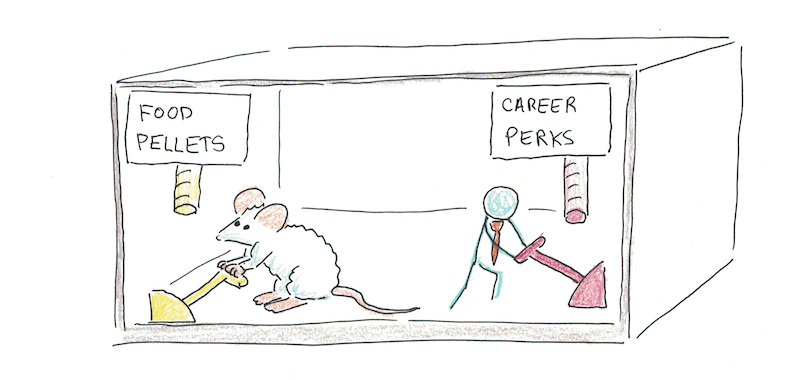
For a lot of people, they never step back and really ask themselves what kind of career they want. Instead, they act like ambitious rats in a Skinner box, pushing the right levers to get short-term career rewards, without asking whether they want to be in that box in the first place.

You Need to Negotiate Your Lifestyle

May, 2019

| Comments

| Share

Soon, Cal Newport and I will be reopening Top Performer for a new session. This is the course we teach that shows you how to deeply understand your career, build rare and valuable skills, and translate those skills into work you love.

In anticipation of the new session, I’ve been writing some lessons on career advice. I started by explaining why you should master your career rather than try to run away from it. I argued that you need to build rare and valuable skills, which don’t come automatically. I also showed why working harder can actually backfire, if that becomes your source of competitive advantage.

The theme throughout all these lessons is that to have a great career, you need career capital. Skills, relationships and other assets that make you in demand.

However, while getting career capital isn’t trivial, and it’s the main thing that separates the desirability of different careers, it isn’t the only step to having work you’ll love. Having career capital isn’t enough, you need to actually use it to negotiate the lifestyle you want to live.

What Kind of Lifestyle Do You Really Want?

For a lot of people, they never step back and really ask themselves what kind of career they want. Instead, they act like ambitious rats in a Skinner box, pushing the right levers to get short-term career rewards, without asking whether they want to be in that box in the first place.

I recently read this interesting story about someone who became a physics major “accidentally”, prodded along by the short-term competition to get grades, and then to get into grad school, he never really asked what kind of career he actually wanted.

I think this is actually a lot more common than most people realize. They get into a company that prioritizes working really long hours, so they start putting in hours to please the people around them, instead of asking whether this company is actually a good fit. Or they start chasing incremental promotions, without really asking whether a tiny bump in salary is worth the added responsibility.

In the first lesson, I made fun of people who chase illusions to get rich without adding value. But, in fairness, at least those people have a lifestyle they’re trying to create. They might be going about it in an ineffective way, but they at least know the kind of life they’re trying to build. Do you?

Continue Reading: https://www.scotthyoung.com/blog/2019/05/26/negotiate-lifestyle/

You Need to Negotiate Your Lifestyle Read More »

How To Turn Career Upheaval Into Breakthrough Momentum

When external forces—whether political shifts, economic downturns, or industry disruptions—shake the very foundation of a career, it’s normal to feel powerless and lost. You may question your path, your value, the decisions you’ve made, and your future. Many thousands of professionals experience these same moments of uncertainty, whether in early, mid, or late career stages. While external circumstances may be beyond our control, research and practical experience show that we can shape our mindset, responses, and deliberate actions to create breakthrough outcomes, even in very turbulent times.

Below are 7 key strategies that provide a framework to regain clarity, strengthen your resilience, and generate new, exciting momentum during periods of career upheaval.

1. Acknowledge and Process Your Emotions

Career upheaval is emotionally taxing and often deeply fear-inducing. Feeling fear, frustration, regret and grief when the work you’ve invested in is threatened is a natural human response and something thousands of people share.

Rather than suppressing these emotions and trying to pretend you’re not feeling them, we benefit from acknowledging and processing them. Techniques like journaling – to get clearer on what you’re thinking and feeling – and engaging in candid, open discussions with trusted peers, seeking new mentorship, and tapping into professional support networks can help you navigate these emotions more productively and effectively than on our own.

Self-compassion is critical at these times as well, and remembering that struggling does not equate to failure. In fact, research indicates that resilience involves not just “bouncing back” from adversity, but adapting and thriving through flexible thought and behavior. Recognizing your emotions and allowing yourself to experience them fully is foundational to navigating upheaval effectively.

2. Reframe the Challenge as Opportunity

Reframing adversity—which is choosing to see our challenges as potentially useful (and often necessary) opportunities for growth—has been shown to significantly strengthen resilience and mental well-being. Research confirms that positive reframing boosts adaptability, helping us cope more effectively with setbacks. When we view difficulties as potential gateways to growth, and keep exploring what that growth can look like in the months and years ahead, we expand our capacity to handle challenge and ultimately support stronger mental health.

Beyond the psychological benefits, reframing allows us to interpret situations in ways that are true and realistic yet also more empowering compared with other, more negative interpretations (such as “I failed this in a big way and it’s utterly hopeless now.)”

By shifting your perspective toward expansion, hope, and possibility, you can open doors to new pathways you might never have considered but are actually better suited to who you are and what you care about most at this time in your life. This shift not only enhances personal growth but can also leads to greater success, impact, and reward in your career and professional life in the long run.

How To Turn Career Upheaval Into Breakthrough Momentum Read More »

Location Matters for Your Career — Not Just Your Investments: Exploring the Best Cities for Commercial Real Estate Careers

In commercial real estate (CRE), we talk endlessly about markets — where to buy, where to build, and where capital is flowing next. But one topic that deserves equal attention is where to build your career.

Just like investments, your professional growth is influenced by location. The cities where you work can shape your exposure to deals, access to mentors, and long-term advancement opportunities. In other words, your market matters as much to your career as it does to your portfolio.

So, which cities are leading the way — and what makes one market better suited than another for long-term career success in CRE? This discussion highlights the best cities for commercial real estate careers and how your choice of market can directly shape your professional future.

1. The Big Hubs Still Offer Scale and Access

It’s no surprise that major markets like New York City, Los Angeles, and Chicago continue to anchor the industry. These are places where deal volume is high, institutional players are active, and career ladders are clearly defined.

If you’re early in your career and want exposure to large-scale transactions, global investors, or complex portfolios, these metros offer a front-row seat. You’ll learn fast, compete hard, and build a network that spans the country.

But with that opportunity often comes trade-offs — long hours, higher costs of living, and intense competition. The experience gained in these markets is invaluable, but not everyone wants to stay in that grind long-term. For those seeking access to some of the best cities for commercial real estate careers, these hubs remain unmatched training grounds.

2. The Rise of Growth Markets

Over the past decade, cities like Dallas–Fort Worth, Austin, Nashville, and Charlotte have emerged as new centers of gravity for CRE careers. These markets are seeing steady population growth, corporate relocations, and increased institutional investment — all of which create demand for development, acquisitions, and management talent.

For many professionals, these metros offer a strong balance: lower costs of living, expanding deal pipelines, and a sense of accessibility that’s sometimes missing in legacy markets. They also provide room for faster career growth — smaller teams, broader responsibilities, and closer exposure to leadership.

However, these rising markets can also be cyclical. They may lack the diversity and stability of larger coastal hubs when the market slows, meaning professionals there often need to be nimble and well-rounded. Still, their growing influence ensures they’ll remain among the best cities for commercial real estate careers for the foreseeable future.

3. West Coast Dynamics — A Hub of Innovation and Resilience

The West Coast continues to play a unique role in CRE. Cities like Seattle, San Francisco, Los Angeles, and San Diego blend traditional real estate expertise with innovation in sustainability, technology, and mixed-use design.

While San Francisco remains a major capital market, its high costs and post-pandemic adjustment have shifted some momentum south — and Southern California has quietly benefited.

In San Diego, for instance, the CRE ecosystem has evolved beyond its reputation as a lifestyle city. Life sciences, defense, and tech-adjacent industries are fueling steady demand for office, lab, and industrial space. The region also offers a high concentration of experienced professionals, sophisticated investors, and boutique firms where collaboration still feels personal.

For professionals who value both opportunity and quality of life, Southern California strikes a rare balance. You can work on institutional-quality deals, build deep client relationships, and still have access to a more sustainable pace and lifestyle — something many mid-career professionals now prioritize.

4. Balancing Career Growth with Quality of Life

The best “career market” is rarely just about deal flow or job titles. It’s about where you can grow and live well. Increasingly, CRE professionals are factoring in commute times, outdoor access, and community culture when choosing where to build their careers.

That’s one reason the Sun Belt and coastal California markets continue to attract top talent — they blend professional opportunity with personal fulfillment. And with the industry’s growing acceptance of hybrid work, it’s easier than ever to base yourself in one of the best cities for commercial real estate careers, allowing you to align your lifestyle and long-term success.

The Takeaway

Choosing a location for your CRE career isn’t just a lifestyle decision — it’s a strategic one. The city you work in determines your access to deals, mentorship, networks, and long-term opportunities.

Whether you’re in the fast lane of New York or Dallas, or the balanced, innovation-driven environment of Southern California, the key is to align your career path with both your professional ambitions and personal priorities.

Because in commercial real estate — just like in investing — location still matters.

Location Matters for Your Career — Not Just Your Investments: Exploring the Best Cities for Commercial Real Estate Careers Read More »

Reduce reneging and keep candidates engaged: Try these tips

Reneging and ghosting are costly inefficiencies in recruiting. Here are practical adjustments you can make to improve your outcomes.

If there’s one word that’s more urgent than ever for recruiting teams today, it’s efficiency.

With leaner teams, slimmer budgets, and an unpredictable market, every hire matters. So when a candidate reneges on an offer, or ghosts late in the process, it’s more than just disappointing—it’s a direct hit to efficiency. And while it’s easy to blame the candidate, sometimes the real issue lies within the recruiting process itself.

Here are practical adjustments you can make to reduce reneges and ghosting, and protect your efficiency.

How can more compelling employer branding reduce reneging?

High-quality talent is less likely to renege when they feel aligned with your values and excited about your culture. Infuse your employer brand throughout your hiring funnel so candidates can see themselves joining your organization. For example:

  • You won’t fill the top of your funnel with quality candidates if you haven’t caught their attention before your competition has. Consider early identification tactics to build awareness and trust earlier in the campus to career journey.
  • Encourage employees and interns to post on the Handshake social feed and share their authentic, real testimonials and examples of work life.
  • Build out your Handshake Brand Page to highlight your benefits, culture, and opportunities.
  • Host hiring events that attract top talent and add value to the candidate experience, like resume review workshops or alumni panels. Post-offer, invite them to new-hire events, or informal team gatherings so they can start networking.

When candidates have started to build relationships and can envision themselves thriving in your organization through real-life stories, they’re less tempted by other offers—and your recruiting funnel becomes more efficient.

Continue Reading: https://joinhandshake.com/blog/employers/reduce-reneging-keep-candidates-engaged/

Reduce reneging and keep candidates engaged: Try these tips Read More »

Skip to content